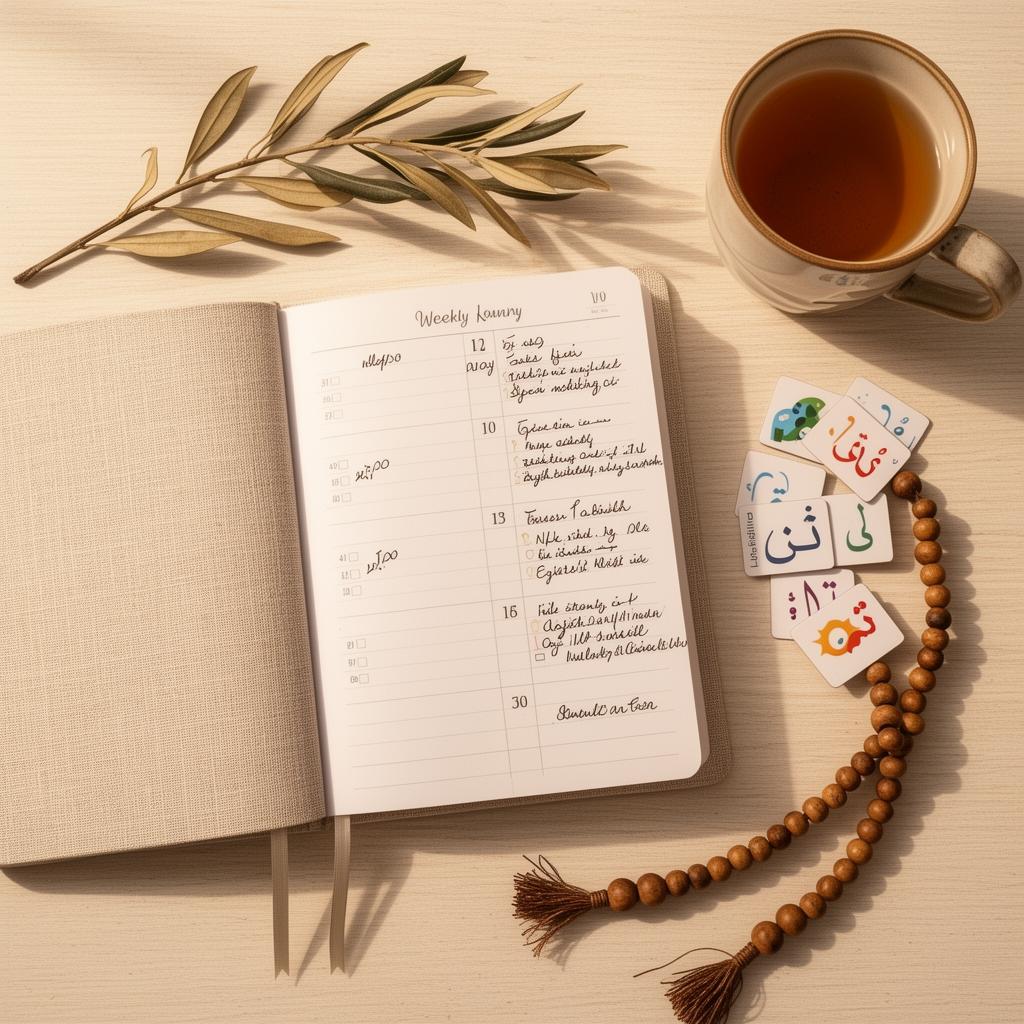
A strong Muslim homeschool curriculum has five parts: core academics, Quran, Arabic, Islamic studies and family life skills. Start with the minimum sustainable rhythm for each part, place parent-led subjects when you have the most energy, and add more only after the routine works for several weeks.
What should a Muslim homeschool curriculum include?
The goal is not to fit a school building into your home. The goal is to create a complete education that your family can repeat with calm and consistency.
| Area | What it can include | A realistic starting point |
|---|---|---|
| Core academics | Math, language arts, science and social studies | Choose one clear spine for math and literacy first |
| Quran | Recitation, memorisation, review and meaning | One focused block plus a short review |
| Arabic | Reading, vocabulary, listening and conversation | Three or four short sessions each week |
| Islamic studies | Aqeedah, seerah, worship, adab and family discussion | Two focused lessons plus daily lived practice |
| Life and wellbeing | Movement, chores, nature, creativity and rest | Protect these as part of the plan, not leftovers |
Choose the core curriculum before adding extras
Start with the subjects that need the clearest progression. For most families, that means math and language arts. A curriculum is useful when it tells you what comes next, suits the child's level and can be taught within the time you actually have.
Science and social studies can be lighter in the first planning cycle. Younger children often do well with shared read-alouds, experiments, nature study and family projects. Older students usually need a more explicit course sequence and a record of completed work.
- Check placement before buying a full level.
- Choose resources you can teach, not only resources that look impressive.
- Prefer one dependable resource over several overlapping subscriptions.
- Leave open space for review, illness, appointments and slower weeks.
Plan Quran, Arabic and Islamic studies as different subjects
These areas support one another, but they do not require the same teaching method. Quran may need careful listening and correction. Arabic benefits from frequent exposure and active use. Islamic studies often works best through stories, discussion, practice and reflection.
Separating them in the plan prevents a common problem: one long Islamic block that becomes too demanding for both parent and child. Shorter blocks also make it easier to notice which skill needs help.
| Subject | Frequency | Example block |
|---|---|---|
| Quran recitation | 4 to 5 days | 10 to 20 minutes with direct support |
| Quran review | Most days | 5 to 10 minutes after salah or before bedtime |
| Arabic | 3 to 5 days | 15 minutes of reading, listening or vocabulary |
| Islamic studies | 2 days | 20 to 30 minutes with a story and discussion |
| Family practice | Daily | Dua, manners, salah and service woven into life |
Adjust the curriculum to age and independence
The younger the child, the more the plan should favour movement, conversation and short direct lessons. As children grow, written work and independent practice can increase gradually. Age matters, but readiness, attention and previous learning matter too.
| Stage | Main emphasis | Parent-led time |
|---|---|---|
| Pre-K and Kindergarten | Play, language, Quran listening, early literacy and number sense | Several 5 to 15 minute moments |
| Elementary | Strong reading and math foundations with short subject blocks | About 60 to 120 minutes across the day |
| Middle school | Growing independence, deeper reading and organised assignments | Direct teaching plus daily check-ins |
| High school | Course requirements, records, independent study and future plans | Coaching, discussion and progress review |
Build the curriculum in four calm weeks
- 1
Week 1: Observe
Track wake times, energy, appointments and the moments when each child learns most easily.
- 2
Week 2: Set anchors
Place math, literacy, Quran and meals. Treat everything else as flexible until these anchors work.
- 3
Week 3: Add layers
Add Arabic, Islamic studies, science and social studies one layer at a time.
- 4
Week 4: Review
Remove what causes repeated conflict, shorten blocks that drag and keep the routines that feel steady.
Common mistakes that make the week feel heavier
- Buying every subject before testing the daily rhythm.
- Giving each child a completely separate day instead of sharing suitable subjects.
- Scheduling every minute with no room for prayer, meals or transitions.
- Expecting independent work before teaching the child how to work independently.
- Measuring a successful day only by completed worksheets.
Plan one calm homeschool week for your family.
Use the free planner to organise family lessons, direct teaching and independent work by child.
Plan My WeekEditorial note: This guide provides practical educational planning ideas. Families should check the homeschool rules and record requirements that apply where they live.