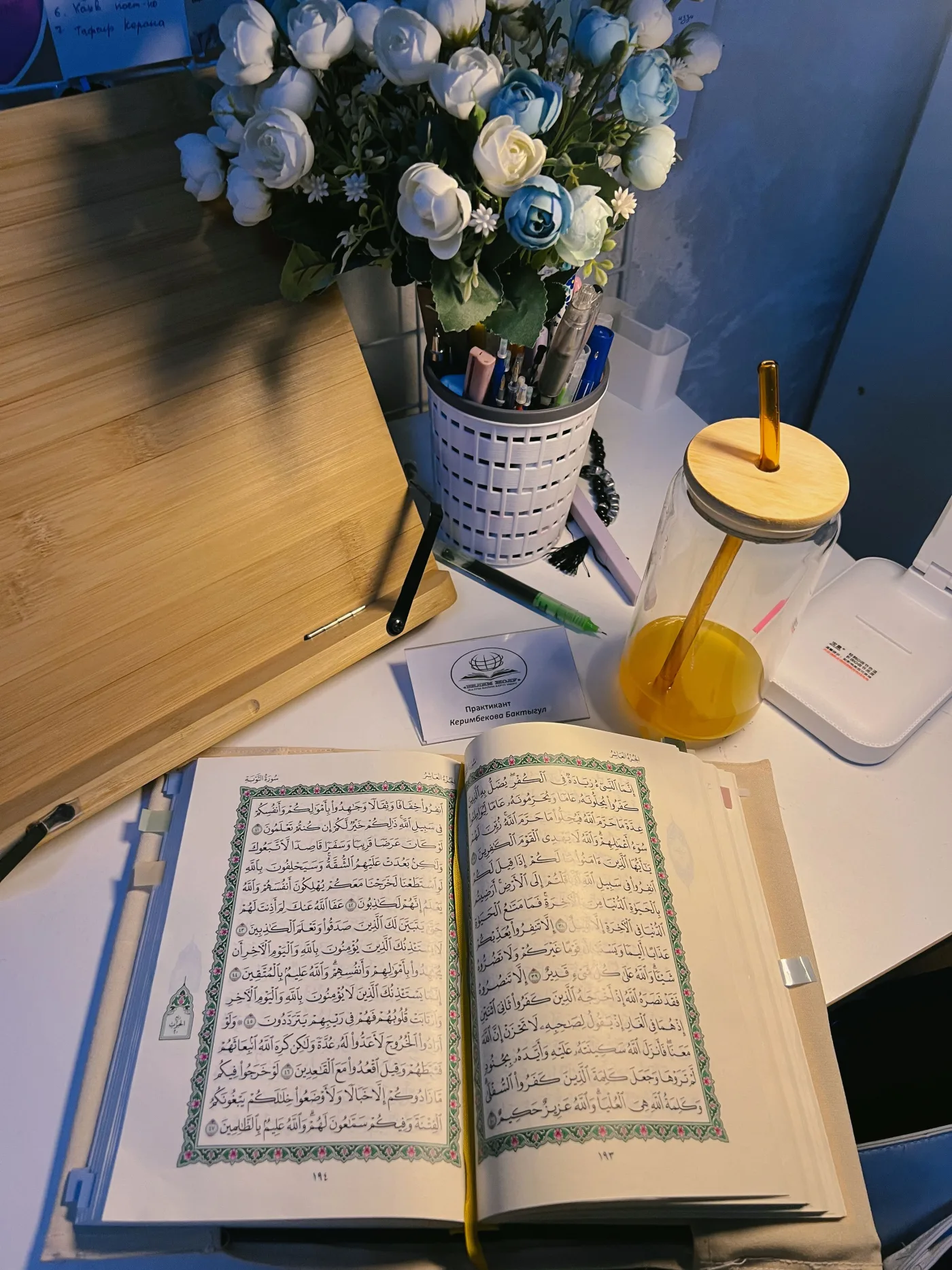
A sustainable Quran memorization schedule gives review more space than new memorization. For a beginner, use one short focused session for new material, one lighter review touchpoint later in the day, and at least one review-only day each week. Adjust the amount to the child's age, fluency and teacher guidance rather than chasing a fixed number of verses.
Every Hifz week needs three different jobs
New memorisation, recent review and older review are different tasks. When all three are treated as one long recitation block, the child may keep moving forward while earlier surahs quietly weaken.
| Job | What it means | Simple example |
|---|---|---|
| New | A small ayah or passage being learned now | Listen, repeat and recite with support |
| Recent review | Material learned in the last days or weeks | Recite before adding anything new |
| Older review | Previously secure surahs that need maintenance | Rotate a small set across the week |
A simple five-day Quran memorization schedule
The labels can sit on any days your family uses. A Sunday-to-Thursday homeschool can keep the same structure. The important part is the sequence: hear accurately, repeat, connect and review.
| Day | New material | Review |
|---|---|---|
| Day 1 | Listen carefully and learn a very small portion | Recite the previous secure portion |
| Day 2 | Repeat Day 1; add only if secure | Review the last two or three sessions |
| Day 3 | Connect the new portions | One older surah or section |
| Day 4 | No new material if accuracy is weak | Recent review plus correction |
| Day 5 | Recite the week's work as one sequence | Family or teacher check |
| Weekend | Optional listening only | One light review touchpoint |
Adjust Quran practice by age and readiness
Age ranges are only planning guides. A child's Quran reading, attention, confidence and previous memorisation matter more than the birthday alone.
| Stage | Session shape | Parent focus |
|---|---|---|
| Ages 4–6 | 5–10 minutes of listening and repeating | Warmth, sound and a clear ending |
| Ages 7–9 | 10–15 minutes plus a short later review | Accuracy before quantity |
| Ages 10–12 | 15–25 minutes with a visible review plan | Growing ownership and honest self-checking |
| Teens | A negotiated target with deeper independent review | Consistency, teacher feedback and workload balance |
Place Quran where the family can repeat it
- Use a quiet, alert part of the day for new memorisation.
- Attach review to a stable family anchor such as after breakfast, after a salah or before bed.
- Keep the mushaf, audio and tracking page ready before the session begins.
- Stop while the child can still finish successfully rather than stretching every session to resistance.
- Use travel, meal preparation or calm play for listening, but keep active recitation separate enough to hear mistakes.
How do you know when to add new verses?
Move forward because the current portion is stable, not because the calendar says it is time.
- The child can begin without repeated prompting.
- The sequence stays intact without guessing through the middle.
- Correction is becoming lighter rather than heavier.
- Recent material is still present after a break.
- Adding new work will not erase the review block.
What to change when Quran time becomes a battle
- 1
Shorten the session
Keep one successful repetition and finish before frustration becomes the routine.
- 2
Separate correction from criticism
Correct one clear point at a time and let the child hear the right model before trying again.
- 3
Reduce new material
Use review-only days until confidence returns instead of pushing through a growing backlog.
- 4
Check the timing
A good plan at the wrong energy level can still fail. Move new work away from hunger, fatigue or the end of an overloaded school day.
- 5
Ask the teacher what to practise
Leave the session with one specific home target instead of trying to repair every weakness at once.
Track enough to protect review, not to create pressure
| Field | What to record | Why it helps |
|---|---|---|
| New portion | Ayah or line learned | Prevents vague targets |
| Recent review | Last three to five portions checked | Catches early forgetting |
| Older review | Surah or section rotated today | Keeps long-term review visible |
| Correction | One pronunciation or sequence point | Guides the next session |
| Energy | Easy, okay or hard | Shows whether timing and load need changing |
Build a Quran routine that fits your child's real day.
Answer a few short questions and create a gentle Quran and Arabic rhythm around age, energy and family commitments.
Build My Quran RoutineEditorial note: This guide provides practical educational planning ideas. Families should check the homeschool rules and record requirements that apply where they live.